

 The government has confirmed that banks, building societies and credit unions will be able to offer Help to Save accounts directly to customers, ending the scheme’s eight-year run as a single-provider product.The government confirmed the change in a tax update on 23 June 2026; HMRC set out the detail the following day in its tax-free savings newsletter. It’s designed to raise awareness of a savings scheme that pays a 50% government bonus worth up to £1,200 but has long struggled with low take-up.At a glance
- A tax-free 50% bonus — up to £1,200 over four years — on savings of £1 to £50 a month
- Reform confirmed 23 June 2026: banks, building societies and credit unions will join National Savings & Investments (NS&I) in offering accounts
- The current scheme continues on today’s rules until it closes to new savers in April 2027
- Around 3 million people are already eligible; eligibility widens again from April 2028
- Bonuses are paid twice — after 2 years and after 4 years — based on your highest balance, not what’s left in the account
Why the delivery model is changing
Since Help to Save launched in 2018, NS&I has been the only organisation allowed to hold the accounts. HM Treasury’s own consultation response accepts this single-provider approach has limited the scheme’s visibility. Take-up has stayed low as a result, which the government attributes to limited public awareness alongside broader behavioural and financial barriers to saving.Following a delivery consultation launched alongside Autumn Budget 2024 and completed in January 2025, HMRC’s newsletter confirmed the reformed scheme is moving to a multi-provider model. Fourteen organisations, including building societies, credit unions and banks such as Lloyds Banking Group and Monzo, responded in writing. HMRC says the aim is “improving access to the scheme, increasing visibility, and supporting higher take-up.”What’s changing, and when
The existing scheme isn’t disappearing overnight — it continues on current rules, run solely through NS&I, until it closes to new savers in April 2027.Exactly when new savers can join the reformed version is genuinely open: the government’s own June 2026 response stops short of a firm date, naming 2028 as the point it’s aiming to have the new registration system ready, and stressing that final design work is still under way. In practice, that leaves room for a gap between the old scheme closing and the new one taking its first sign-ups.Separately, eligibility widens again from April 2028 to include Universal Credit claimants who receive the “child” element, the “carer’s” element, or both. That’s estimated to reach around 1.5 million more people who care for children or provide substantial care to someone with a disability.The reform documents also point to a simpler bonus structure for the future scheme: six-monthly payments made directly into the Help to Save account, rather than the two lump sums paid into a separate nominated account under today’s rules. That’s a change for the scheme’s next phase, not for anyone saving under the current terms.How the Help to Save bonus works today
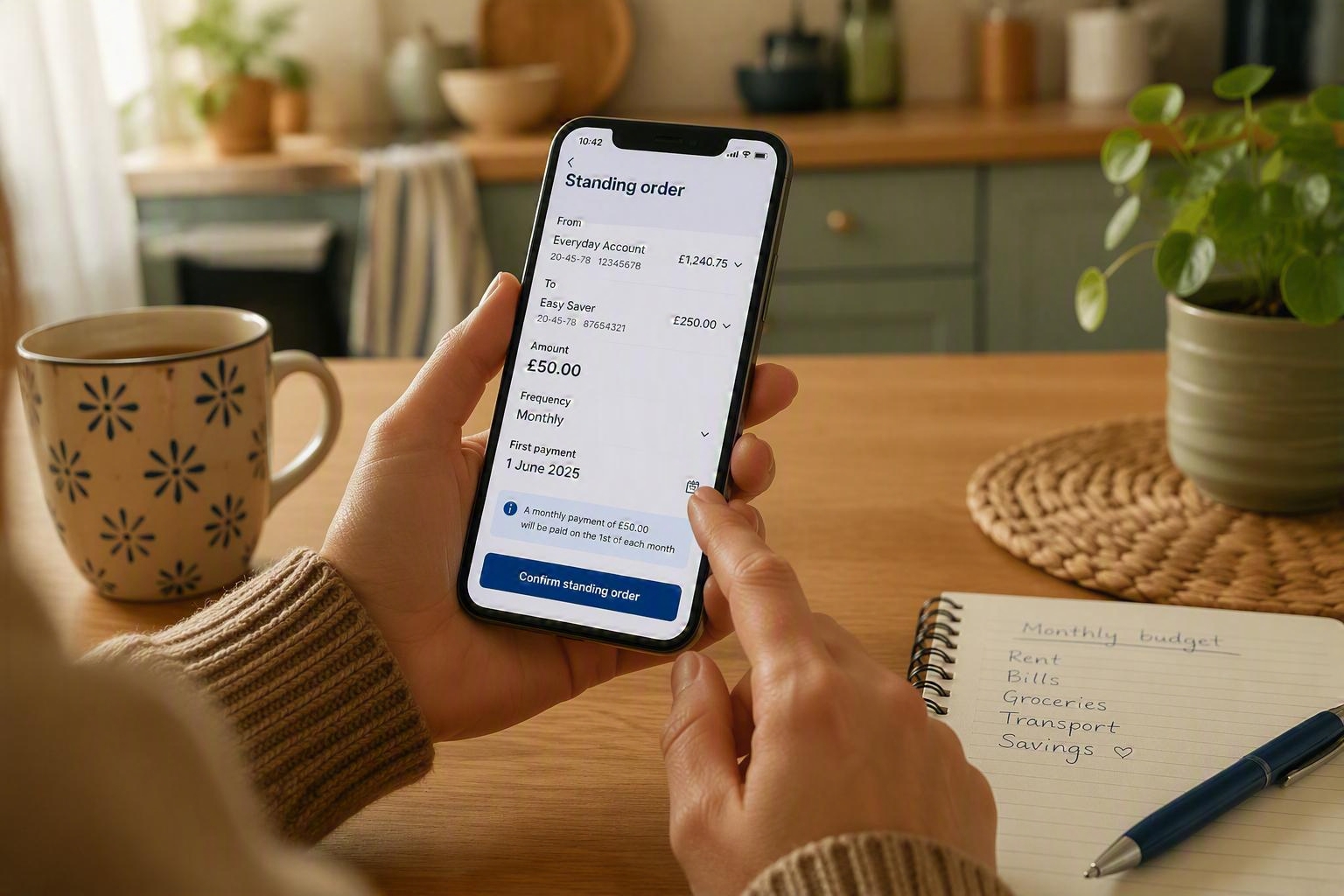
Anyone opening an account now gets the rules that have applied since 2018. You can pay in between £1 and £50 a calendar month — you don’t have to pay in every month, and can use debit card, standing order or bank transfer.Two bonuses are paid, both worked out on your highest-ever balance rather than your closing balance:- After 2 years: 50% of the highest balance you’ve reached in that time
- After 4 years: 50% of the difference between your highest balance in years 3–4 and your highest balance in years 1–2
Who qualifies, and what it means for your benefits
You currently qualify if you’re getting Universal Credit, you’re in work, and you (or you and your partner combined, for a joint claim) earned £1 or more in your last monthly assessment period. That threshold replaced a stricter 16-hours-a-week earnings test on 6 April 2025, a change HMRC’s own impact assessment estimates made around 550,000 more people eligible, taking the total eligible population to roughly 3 million.Help to Save used to also be open via Working Tax Credit or Child Tax Credit. That route closed for good when the tax credit system ended completely on 5 April 2025, and anyone who relied on it has since moved to Universal Credit or seen their claim end.Saving through Help to Save need not come at the expense of your benefits, which is worth knowing if that’s ever put you off. If you and your partner have £6,000 or less in personal savings between you, it has no effect on Universal Credit or Housing Benefit — and this includes anything in a Help to Save account.The bonus itself isn’t counted as income for either benefit. It’s only once combined savings pass £16,000 that Universal Credit entitlement generally stops altogether; two partners each saving the maximum through Help to Save alone would reach £7,200 between them, which is well short of that, though LITRG notes it would exceed the lower £6,000 threshold where a taper starts.What this means for you
If you’re on Universal Credit and in work, checking your eligibility takes a few minutes online.- Check you’re eligible. You need to be on Universal Credit, in work, and have earned £1 or more in your last monthly assessment period (combined earnings, for joint claims).
- Get your details ready. You’ll need your National Insurance number, UK bank details for bonus payments, and a Government Gateway sign-in, which you can set up while applying if you don’t have one.
- Apply however suits you. Use GOV.UK, the free HMRC app, or call HMRC’s Help to Save helpline on 0300 322 7093.
- Save what you can, not the maximum. Any amount from £1 to £50 a month earns the same 50% rate, and you can change it whenever you like.
- Keep the account open if you withdraw. Your bonus is based on your highest balance, so dipping in for an emergency won’t undo what you’ve earned — just avoid closing the account before your next bonus is due.
- Banks, building societies and credit unions will join NS&I in offering Help to Save accounts, confirmed by the government on 23 June 2026
- The current scheme carries on as normal until it closes to new savers in April 2027, with the reformed version expected to follow once providers are ready
- You currently qualify if you’re on Universal Credit, in work, and earned £1 or more in your last assessment period — around 3 million people already meet this
- The bonus is 50% of your highest balance, paid after 2 years and again after 4 years, up to £1,200 in total
- Up to £6,000 in savings has no effect on Universal Credit or Housing Benefit, and the bonus itself isn’t treated as income
- Eligibility widens again from April 2028, reaching an estimated 1.5 million more Universal Credit claimants who care for children or others
Written by:
Tax Rebate Services Editorial Team
Reviewed by:
Tony Shanks
,
qualified Taxation Technician (ATT)
Last updated:
This article provides general information and is correct as at the date shown. It isn't personalised tax advice — for help with your own circumstances, speak to a qualified adviser or HMRC.

